gRPC-Go框架学习

grpc介绍

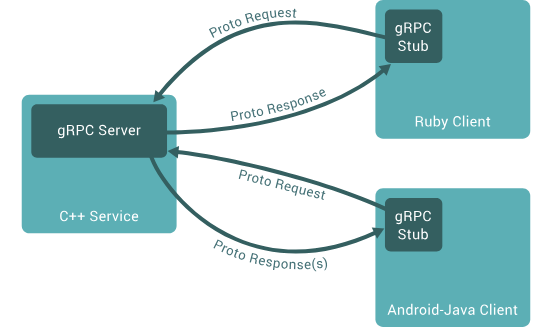
gRPC 用来在客户端与服务端之间进行远程过程调用。开发时先在 .proto 文件中定义消息和服务,再通过工具生成客户端与服务端代码;客户端调用生成的方法,服务端实现对应接口。

下面按 Go 的使用顺序记录:先看 Protobuf 类型,再看单文件与多文件的服务定义,最后分别尝试服务端流、客户端流和双向流。协议与生成代码之间的关系,也可以结合 gRPC 官方介绍来看。

gRPC-Go框架学习配图

proto介绍

Protocol Buffers(Protobuf)负责定义结构化数据并生成相应语言的类型与序列化代码。gRPC 默认使用它描述消息和服务,具体格式见 Protocol Buffers 概览。

一次接入可以拆成四步:

  1. 在 .proto 文件里定义 message 和 service。
  2. 使用 protoc 与相应插件生成消息类型和 RPC 代码。
  3. 服务端实现生成的服务接口。
  4. 客户端通过生成的调用代码发起请求。

服务端与客户端可以使用不同语言,但需要遵守相同的接口定义。后续增加字段时,也要遵守 Protobuf 的兼容规则,不能只凭“可扩展”就任意改动字段编号或类型。

数据类型

基本数据类型

1
2
3
4
5
6
7
8
9
10
11
12
13
14
15
16
message Request {
double a1 = 1;
float a2 = 2;
int32 a3 = 3;
uint32 a4 = 4;
uint64 a5 = 5;
sint32 a6 = 6;
sint64 a7 = 7;
fixed32 a8 = 8;
fixed64 a9 = 9;
sfixed32 a10 = 10;
sfixed64 a11 = 11;
bool a12 = 12;
string a13 = 13;
bytes a14 = 14;
}

对应go类型

1
2
3
4
5
6
7
8
9
10
11
12
13
14
15
16
17
18
19
20
type Request struct {
state protoimpl.MessageState
sizeCache protoimpl.SizeCache
unknownFields protoimpl.UnknownFields

A1 float64 `protobuf:"fixed64,1,opt,name=a1,proto3" json:"a1,omitempty"`
A2 float32 `protobuf:"fixed32,2,opt,name=a2,proto3" json:"a2,omitempty"`
A3 int32 `protobuf:"varint,3,opt,name=a3,proto3" json:"a3,omitempty"`
A4 uint32 `protobuf:"varint,4,opt,name=a4,proto3" json:"a4,omitempty"`
A5 uint64 `protobuf:"varint,5,opt,name=a5,proto3" json:"a5,omitempty"`
A6 int32 `protobuf:"zigzag32,6,opt,name=a6,proto3" json:"a6,omitempty"`
A7 int64 `protobuf:"zigzag64,7,opt,name=a7,proto3" json:"a7,omitempty"`
A8 uint32 `protobuf:"fixed32,8,opt,name=a8,proto3" json:"a8,omitempty"`
A9 uint64 `protobuf:"fixed64,9,opt,name=a9,proto3" json:"a9,omitempty"`
A10 int32 `protobuf:"fixed32,10,opt,name=a10,proto3" json:"a10,omitempty"`
A11 int64 `protobuf:"fixed64,11,opt,name=a11,proto3" json:"a11,omitempty"`
A12 bool `protobuf:"varint,12,opt,name=a12,proto3" json:"a12,omitempty"`
A13 string `protobuf:"bytes,13,opt,name=a13,proto3" json:"a13,omitempty"`
A14 []byte `protobuf:"bytes,14,opt,name=a14,proto3" json:"a14,omitempty"`
}
.proto Type 解释 Go Type
double float64
float float32
int32 使用变长编码,对于负值的效率很低,如果你的域有可能有负值,请使用sint64替代 int32
uint32 使用变长编码 uint32
uint64 使用变长编码 uint64
sint32 使用变长编码,这些编码在负值时比int32高效的多 int32
sint64 使用变长编码,有符号的整型值。编码时比通常的int64高效 int64
fixed32 总是4个字节,如果数值总是比总是比228大的话,这个类型会比uint32高效。 uint32
fixed64 总是8个字节,如果数值总是比总是比256大的话,这个类型会比uint64高效。 uint64
sfixed32 总是4个字节 int32
sfixed64 总是8个字节 int64
bool bool
string 一个字符串必须是UTF-8编码或者7-bit ASCII编码的文本 string
bytes 可能包含任意顺序的字节数据 []byte

数组类型

1
2
3
4
5
message ArrayRequest {
repeated int64 a1 = 1;
repeated string a2 = 2;
repeated Request request_list = 3;
}

对应go类型

1
2
3
4
5
type ArrayRequest struct {
A1 []int64
A2 []string
RequestList []*Request
}

map类型

1
2
3
4
5
message MapRequest {
map<int64, string> m_i_s = 1;
map<string, bool> m_i_b = 2;
map<string, ArrayRequest> m_i_arr = 3;
}

对应go类型

1
2
3
4
5
6
type MapRequest struct {

MIS map[int64]string
MIB map[string]bool
MIArr map[string]*ArrayRequest
}

嵌套类型

1
2
3
4
5
6
7
message Q1 {
message Q2{
string name2 = 2;
}
string name1 = 1;
Q2 q2 = 2;
}

对应go类型

1
2
3
4
5
6
7
8
type Q1 struct {
state protoimpl.MessageState
sizeCache protoimpl.SizeCache
unknownFields protoimpl.UnknownFields

Name1 string `protobuf:"bytes,1,opt,name=name1,proto3" json:"name1,omitempty"`
Q2 *Q1_Q2 `protobuf:"bytes,2,opt,name=q2,proto3" json:"q2,omitempty"`
}

编写风格建议

  1. 文件名建议下划线,例如:my_file.proto
  2. 包名和目录名对应
  3. 服务名、方法名、消息名均为大驼峰
  4. 字段名为下划线

多服务使用

单proto文件

proto

1
2
3
4
5
6
7
8
9
10
11
12
13
14
15
16
17
18
19
syntax = "proto3"; // 指定proto版本
// 指定golang包名
option go_package = "/duo_proto";

service VideoService {
rpc Look(Request)returns(Response){}
}

message Request{
string name = 1;
}
message Response{
string name = 1;
}


service OrderService {
rpc Buy(Request)returns(Response){}
}

服务端

1
2
3
4
5
6
7
8
9
10
11
12
13
14
15
16
17
18
19
20
21
22
23
24
25
26
27
28
29
30
31
32
33
34
35
36
37
38
39
40
41
42
package main

import (
"context"
"fmt"
"google.golang.org/grpc"
"grpc_study/grpc_proto/duo_proto"
"log"
"net"
)

type VideoServer struct {
}

func (VideoServer) Look(ctx context.Context, request *duo_proto.Request) (res *duo_proto.Response, err error) {
fmt.Println("video:", request)
return &duo_proto.Response{
Name: "fengfeng",
}, nil
}

type OrderServer struct {
}

func (OrderServer) Buy(ctx context.Context, request *duo_proto.Request) (res *duo_proto.Response, err error) {
fmt.Println("order:", request)
return &duo_proto.Response{
Name: "fengfeng",
}, nil
}

func main() {
listen, err := net.Listen("tcp", ":8080")
if err != nil {
log.Fatal(err)
}
s := grpc.NewServer()
duo_proto.RegisterVideoServiceServer(s, &VideoServer{})
duo_proto.RegisterOrderServiceServer(s, &OrderServer{})
fmt.Println("grpc server程序运行在:8080")
err = s.Serve(listen)
}

客户端

1
2
3
4
5
6
7
8
9
10
11
12
13
14
15
16
17
18
19
20
21
22
23
24
25
26
27
28
29
30
31
32
33
34
package main

import (
"context"
"fmt"
"google.golang.org/grpc"
"google.golang.org/grpc/credentials/insecure"
"grpc_study/grpc_proto/duo_proto"
"log"
)

func main() {
addr := ":8080"
// 使用 grpc.Dial 创建一个到指定地址的 gRPC 连接。
// 此处使用不安全的证书来实现 SSL/TLS 连接
conn, err := grpc.Dial(addr, grpc.WithTransportCredentials(insecure.NewCredentials()))
if err != nil {
log.Fatalf(fmt.Sprintf("grpc connect addr [%s] 连接失败 %s", addr, err))
}
defer conn.Close()

orderClient := duo_proto.NewOrderServiceClient(conn)
res, err := orderClient.Buy(context.Background(), &duo_proto.Request{
Name: "枫枫",
})
fmt.Println(res, err)

videoClient := duo_proto.NewVideoServiceClient(conn)
res, err = videoClient.Look(context.Background(), &duo_proto.Request{
Name: "枫枫",
})
fmt.Println(res, err)

}

多proto文件

当项目大起来之后,会有很多个service,rpc,message

我们会将不同服务放在不同的proto文件中

还可以放一些公共的proto文件

proto

common.proto

1
2
3
4
5
6
7
8
9
10
11
12
syntax = "proto3";
package proto;
option go_package = "/proto";


message Request{
string name = 1;
}
message Response{
string name = 1;
}

video.proto

1
2
3
4
5
6
7
8
syntax = "proto3";
package proto1;
option go_package = "/proto";
import "common.proto";

service VideoService {
rpc Look(Request)returns(Response){}
}

order.proto

1
2
3
4
5
6
7
8
syntax = "proto3";
package proto;
option go_package = "/proto";
import "common.proto";

service OrderService {
rpc Look(Request)returns(Response){}
}

生成命令

1
2
3
protoc -I .\service_proto --go_out=plugins=grpc:./service_proto .\service_proto\order.proto
protoc -I .\service_proto --go_out=plugins=grpc:./service_proto .\service_proto\video.proto
protoc -I .\service_proto --go_out=plugins=grpc:./service_proto .\service_proto\common.proto

如果有import的话,必须得加上package
并且要和import的package相同

服务端

1
2
3
4
5
6
7
8
9
10
11
12
13
14
15
16
17
18
19
20
21
22
23
24
25
26
27
28
29
30
31
32
33
34
35
36
37
38
39
40
41
42
43
package main

import (
"context"
"fmt"
"google.golang.org/grpc"
"grpc_study/service_proto/proto"
"log"
"net"
)

type VideoServer struct {
}

func (VideoServer) Look(ctx context.Context, request *proto.Request) (res *proto.Response, err error) {
fmt.Println("video:", request)
return &proto.Response{
Name: "fengfeng",
}, nil
}

type OrderServer struct {
}

func (OrderServer) Look(ctx context.Context, request *proto.Request) (res *proto.Response, err error) {
fmt.Println("order:", request)
return &proto.Response{
Name: "fengfeng",
}, nil
}

func main() {
listen, err := net.Listen("tcp", ":8080")
if err != nil {
log.Fatal(err)
}
s := grpc.NewServer()
proto.RegisterVideoServiceServer(s, &VideoServer{})
proto.RegisterOrderServiceServer(s, &OrderServer{})
fmt.Println("grpc server程序运行在:8080")
err = s.Serve(listen)
}

客户端

1
2
3
4
5
6
7
8
9
10
11
12
13
14
15
16
17
18
19
20
21
22
23
24
25
26
27
28
29
30
31
32
33
34
35
package main

import (
"context"
"fmt"
"google.golang.org/grpc"
"google.golang.org/grpc/credentials/insecure"
"grpc_study/service_proto/proto"
"log"
)

func main() {
addr := ":8080"
// 使用 grpc.Dial 创建一个到指定地址的 gRPC 连接。
// 此处使用不安全的证书来实现 SSL/TLS 连接
conn, err := grpc.Dial(addr, grpc.WithTransportCredentials(insecure.NewCredentials()))
if err != nil {
log.Fatalf(fmt.Sprintf("grpc connect addr [%s] 连接失败 %s", addr, err))
}
defer conn.Close()

orderClient := proto.NewOrderServiceClient(conn)
res, err := orderClient.Look(context.Background(), &proto.Request{
Name: "枫枫",
})
fmt.Println(res, err)

videoClient := proto.NewVideoServiceClient(conn)
res, err = videoClient.Look(context.Background(), &proto.Request{
Name: "枫枫",
})
fmt.Println(res, err)

}

流式调用

前面的例子主要是一次请求对应一次响应。下面分别记录服务端持续返回多条消息、客户端持续上传多条消息,以及两边都能连续发送消息的情况。

服务端流式

基本使用

proto

1
2
3
4
5
6
7
8
9
10
11
12
syntax = "proto3";
option go_package = "/proto";

service Simple {
rpc Fun(Request)returns(Response){}
}
message Request {
string name = 1;
}
message Response {
string Text = 1;
}

服务端

1
2
3
4
5
6
7
8
9
10
11
12
13
14
15
16
17
18
19
20
21
22
23
24
25
26
27
28
29
30
31
32
package main

import (
"fmt"
"google.golang.org/grpc"
"grpc_study/stream_proto/proto"
"log"
"net"
)

type ServiceStream struct{}

func (ServiceStream) Fun(request *proto.Request, stream proto.ServiceStream_FunServer) error {
fmt.Println(request)
for i := 0; i < 10; i++ {
stream.Send(&proto.Response{
Text: fmt.Sprintf("第%d轮数据", i),
})
}
return nil
}

func main() {
listen, err := net.Listen("tcp", ":8080")
if err != nil {
log.Fatal(err)
}
server := grpc.NewServer()
proto.RegisterServiceStreamServer(server, &ServiceStream{})

server.Serve(listen)
}

客户端

1
2
3
4
5
6
7
8
9
10
11
12
13
14
15
16
17
18
19
20
21
22
23
24
25
26
27
28
29
30
31
32
package main

import (
"context"
"fmt"
"google.golang.org/grpc"
"google.golang.org/grpc/credentials/insecure"
"grpc_study/stream_proto/proto"
"log"
)

func main() {
addr := ":8080"
// 使用 grpc.Dial 创建一个到指定地址的 gRPC 连接。
// 此处使用不安全的证书来实现 SSL/TLS 连接
conn, err := grpc.Dial(addr, grpc.WithTransportCredentials(insecure.NewCredentials()))
if err != nil {
log.Fatalf(fmt.Sprintf("grpc connect addr [%s] 连接失败 %s", addr, err))
}
defer conn.Close()
// 初始化客户端
client := proto.NewServiceStreamClient(conn)

stream, err := client.Fun(context.Background(), &proto.Request{
Name: "张三",
})
for i := 0; i < 10; i++ {
response, err := stream.Recv()
fmt.Println(response, err)
}

}
客户端不知道服务端什么时候结束
1
2
3
4
5
6
7
8
9
10
stream, err := client.Fun(context.Background(), &proto.Request{
Name: "张三",
})
for {
response, err := stream.Recv()
if err == io.EOF {
break
}
fmt.Println(response)
}

案例

下载文件

proto
1
2
3
4
5
6
7
8
9
10
11
12
13
14
15
16
17
18
syntax = "proto3";
option go_package = "/proto";


message Request {
string name = 1;
}

message FileResponse{
string file_name = 1;
bytes content = 2;
}
service ServiceStream{
rpc DownLoadFile(Request)returns(stream FileResponse){}
}


// protoc -I . --go_out=plugins=grpc:./stream_proto .\stream_proto\stream.proto
服务端
1
2
3
4
5
6
7
8
9
10
11
12
13
14
15
16
17
18
19
20
21
22
23
24
25
26
27
28
29
30
31
32
33
34
35
36
37
38
39
40
41
42
43
44
45
46
47
48
49
package main

import (
"fmt"
"google.golang.org/grpc"
"grpc_study/stream_proto/proto"
"io"
"log"
"net"
"os"
)

type ServiceStream struct{}


func (ServiceStream) DownLoadFile(request *proto.Request, stream proto.ServiceStream_DownLoadFileServer) error {
fmt.Println(request)
file, err := os.Open("static/1.gvb_web项目搭建.mp4")
if err != nil {
return err
}
defer file.Close()

for {
buf := make([]byte, 2048)
_, err = file.Read(buf)
if err == io.EOF {
break
}
if err != nil {
break
}
stream.Send(&proto.FileResponse{
Content: buf,
})
}
return nil
}

func main() {
listen, err := net.Listen("tcp", ":8080")
if err != nil {
log.Fatal(err)
}
server := grpc.NewServer()
proto.RegisterServiceStreamServer(server, &ServiceStream{})

server.Serve(listen)
}
客户端
1
2
3
4
5
6
7
8
9
10
11
12
13
14
15
16
17
18
19
20
21
22
23
24
25
26
27
28
29
30
31
32
33
34
35
36
37
38
39
40
41
42
43
44
45
46
47
48
49
package main

import (
"bufio"
"context"
"fmt"
"google.golang.org/grpc"
"google.golang.org/grpc/credentials/insecure"
"grpc_study/stream_proto/proto"
"io"
"log"
"os"
)

func main() {
addr := ":8080"
// 使用 grpc.Dial 创建一个到指定地址的 gRPC 连接。
// 此处使用不安全的证书来实现 SSL/TLS 连接
conn, err := grpc.Dial(addr, grpc.WithTransportCredentials(insecure.NewCredentials()))
if err != nil {
log.Fatalf(fmt.Sprintf("grpc connect addr [%s] 连接失败 %s", addr, err))
}
defer conn.Close()
// 初始化客户端
client := proto.NewServiceStreamClient(conn)

stream, err := client.DownLoadFile(context.Background(), &proto.Request{
Name: "张三",
})

file, err := os.OpenFile("static/1.gvb_web项目搭建1.mp4", os.O_CREATE|os.O_WRONLY, 0600)
if err != nil {
log.Fatalln(err)
}
defer file.Close()

writer := bufio.NewWriter(file)
var index int
for {
index++
response, err := stream.Recv()
if err == io.EOF {
break
}
fmt.Printf("第%d 次, 写入 %d 数据\n", index, len(response.Content))
writer.Write(response.Content)
}
writer.Flush()
}

客户端流式

基本使用

proto

1
2
3
4
5
6
7
8
9
10
11
12
syntax = "proto3";
option go_package = "/proto";
message Response {
string Text = 1;
}
message FileRequest{
string file_name = 1;
bytes content = 2;
}
service ClientStream{
rpc UploadFile(stream FileRequest)returns(Response){}
}

服务端

1
2
3
4
5
6
7
8
9
10
11
12
13
14
15
16
17
18
19
20
21
22
23
24
25
26
27
28
29
30
31
32
package main

import (
"fmt"
"google.golang.org/grpc"
"grpc_study/stream_proto/proto"
"log"
"net"
)

type ClientStream struct{}

func (ClientStream) UploadFile(stream proto.ClientStream_UploadFileServer) error {
for i := 0; i < 10; i++ {
response, err := stream.Recv()
fmt.Println(response, err)
}
stream.SendAndClose(&proto.Response{Text: "完毕了"})
return nil
}

func main() {
listen, err := net.Listen("tcp", ":8080")
if err != nil {
log.Fatal(err)
}
server := grpc.NewServer()
proto.RegisterClientStreamServer(server, &ClientStream{})

server.Serve(listen)
}

客户端

1
2
3
4
5
6
7
8
9
10
11
12
13
14
15
16
17
18
19
20
21
22
23
24
25
26
27
package main

import (
"context"
"fmt"
"google.golang.org/grpc"
"google.golang.org/grpc/credentials/insecure"
"grpc_study/stream_proto/proto"
"log"
)

func main() {
addr := ":8080"
conn, err := grpc.Dial(addr, grpc.WithTransportCredentials(insecure.NewCredentials()))
if err != nil {
log.Fatalf(fmt.Sprintf("grpc connect addr [%s] 连接失败 %s", addr, err))
}
defer conn.Close()
// 初始化客户端
client := proto.NewClientStreamClient(conn)
stream, err := client.UploadFile(context.Background())
for i := 0; i < 10; i++ {
stream.Send(&proto.FileRequest{FileName: fmt.Sprintf("第%d次", i)})
}
response, err := stream.CloseAndRecv()
fmt.Println(response, err)
}

案例

上传文件

服务端
1
2
3
4
5
6
7
8
9
10
11
12
13
14
15
16
17
18
19
20
21
22
23
24
25
26
27
28
29
30
31
32
33
34
35
36
37
38
39
40
41
42
43
44
45
46
47
48
49
package main

import (
"bufio"
"fmt"
"google.golang.org/grpc"
"grpc_study/stream_proto/proto"
"io"
"log"
"net"
"os"
)

type ClientStream struct{}

func (ClientStream) UploadFile(stream proto.ClientStream_UploadFileServer) error {

file, err := os.OpenFile("static/x.png", os.O_CREATE|os.O_WRONLY, 0600)
if err != nil {
log.Fatalln(err)
}
defer file.Close()

writer := bufio.NewWriter(file)
var index int
for {
index++
response, err := stream.Recv()
if err == io.EOF {
break
}
writer.Write(response.Content)
fmt.Printf("第%d次", index)
}
writer.Flush()
stream.SendAndClose(&proto.Response{Text: "完毕了"})
return nil
}

func main() {
listen, err := net.Listen("tcp", ":8080")
if err != nil {
log.Fatal(err)
}
server := grpc.NewServer()
proto.RegisterClientStreamServer(server, &ClientStream{})

server.Serve(listen)
}
客户端
1
2
3
4
5
6
7
8
9
10
11
12
13
14
15
16
17
18
19
20
21
22
23
24
25
26
27
28
29
30
31
32
33
34
35
36
37
38
39
40
41
42
43
44
45
46
47
48
49
package main

import (
"context"
"fmt"
"google.golang.org/grpc"
"google.golang.org/grpc/credentials/insecure"
"grpc_study/stream_proto/proto"
"io"
"log"
"os"
)

func main() {
addr := ":8080"
// 使用 grpc.Dial 创建一个到指定地址的 gRPC 连接。
// 此处使用不安全的证书来实现 SSL/TLS 连接
conn, err := grpc.Dial(addr, grpc.WithTransportCredentials(insecure.NewCredentials()))
if err != nil {
log.Fatalf(fmt.Sprintf("grpc connect addr [%s] 连接失败 %s", addr, err))
}
defer conn.Close()
// 初始化客户端
client := proto.NewClientStreamClient(conn)
stream, err := client.UploadFile(context.Background())

file, err := os.Open("static/21.png")
if err != nil {
log.Fatalln(err)
}
defer file.Close()

for {
buf := make([]byte, 2048)
_, err = file.Read(buf)
if err == io.EOF {
break
}
if err != nil {
break
}
stream.Send(&proto.FileRequest{
FileName: "x.png",
Content: buf,
})
}
response, err := stream.CloseAndRecv()
fmt.Println(response, err)
}

双向流

基本使用

proto

1
2
3
4
5
6
7
8
9
10
11
12
13
syntax = "proto3";
option go_package = "/proto";

message Request {
string name = 1;
}
message Response {
string Text = 1;
}

service BothStream{
rpc Chat(stream Request)returns(stream Response){}
}

服务端

1
2
3
4
5
6
7
8
9
10
11
12
13
14
15
16
17
18
19
20
21
22
23
24
25
26
27
28
29
30
31
32
33
package main

import (
"fmt"
"google.golang.org/grpc"
"grpc_study/stream_proto/proto"
"log"
"net"
)

type BothStream struct{}

func (BothStream) Chat(stream proto.BothStream_ChatServer) error {
for i := 0; i < 10; i++ {
request, _ := stream.Recv()
fmt.Println(request)
stream.Send(&proto.Response{
Text: "你好",
})
}
return nil
}

func main() {
listen, err := net.Listen("tcp", ":8080")
if err != nil {
log.Fatal(err)
}
server := grpc.NewServer()
proto.RegisterBothStreamServer(server, &BothStream{})

server.Serve(listen)
}

客户端

1
2
3
4
5
6
7
8
9
10
11
12
13
14
15
16
17
18
19
20
21
22
23
24
25
26
27
28
29
30
31
32
package main

import (
"context"
"fmt"
"google.golang.org/grpc"
"google.golang.org/grpc/credentials/insecure"
"grpc_study/stream_proto/proto"
"log"
)

func main() {
addr := ":8080"
// 使用 grpc.Dial 创建一个到指定地址的 gRPC 连接。
// 此处使用不安全的证书来实现 SSL/TLS 连接
conn, err := grpc.Dial(addr, grpc.WithTransportCredentials(insecure.NewCredentials()))
if err != nil {
log.Fatalf(fmt.Sprintf("grpc connect addr [%s] 连接失败 %s", addr, err))
}
defer conn.Close()
// 初始化客户端
client := proto.NewBothStreamClient(conn)
stream, err := client.Chat(context.Background())

for i := 0; i < 10; i++ {
stream.Send(&proto.Request{
Name: fmt.Sprintf("第%d次", i),
})
response, err := stream.Recv()
fmt.Println(response, err)
}
}

参考资料

gRPC官方文档
gRPC文档-枫枫知道

延伸阅读


gRPC-Go框架学习
https://blog.phlin.cn/2024/10/02/grpc/
作者
phlin
发布于
2024年10月2日
许可协议